Perspectives
Even after getting into YC, they decided to rebuild their product from scratch
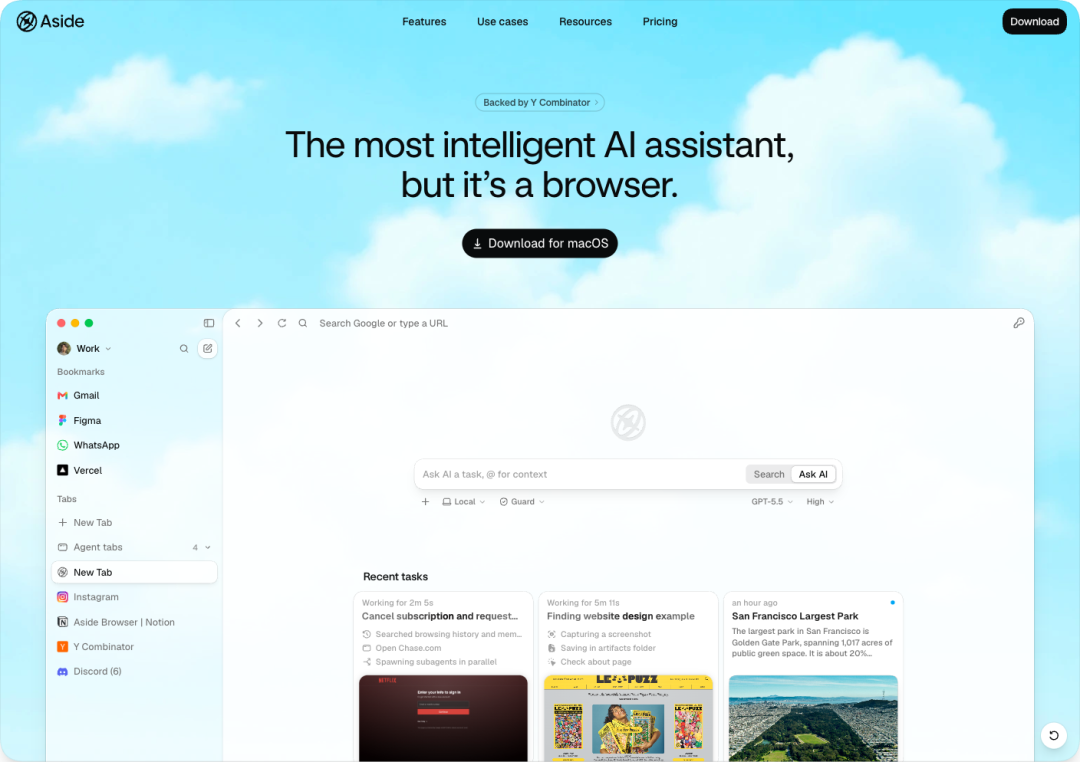
As Aside moved from a sales-meeting assistant to an AI browser, what did it keep—and what new responsibilities came with the change? A look back at a startup’s decision.
Translated from 简体中文

Booking a meeting room became a test of Aside's own product.
As co-founder and CPO Chanhee Lee recalled in an EO interview, the venue they used had a webpage for reserving meeting rooms, but the agent in their browser could not understand it. Only after the team fixed the parsing problem did it complete that small task. This happened while they were developing their AI browser and was recounted in the interview published on August 10. EO interview[1]
Something small enough to do yourself in a few clicks turned out to test the product's most important promise: the user is already working here—can the AI take the next steps?
Just a few months earlier, however, these five people had been building a different kind of product.
Starting with work they already knew
Aside's company page on Y Combinator still retains the description of its earlier product: a real-time assistant for enterprise technical sales. It listens to sales meetings, finds answers in documents and past conversations, prompts salespeople when needed and provides feedback after the meeting. YC company page and original product description[2]
That direction grew out of the founders' experience. Jun and Chanhee had been early engineers at Airbridge and had encountered the work of enterprise technical sales. Building a product around difficulties they had seen was a reasonable starting point: salespeople need accurate information quickly when facing customers, but the answers may be scattered across different tools and historical records.
The more familiar a setting is, the easier it can be to believe that all you need is a better-polished product.