AWS offers $40,000 for AI agents that take everyday chores off people’s hands
Submissions close September 14, with a $40,000 cash prize pool. Check regional eligibility, open-source requirements and the earlier deadline for applying for cloud credits first.
By Prompthon5 min read
Translated from 简体中文
AWS
AI agents
Hackathon
Strands Agents SDK
Open source
If you have a task that feels too small to build a company around, yet you genuinely wish someone else would handle it, this competition could be useful.
AWS is running the online Agents for Humans Hackathon, seeking AI agents that handle everyday repetitive tasks. The total cash prize pool is $40,000, and project submissions close on September 14, 2026. Entrants must use the Strands Agents SDK to turn a specific task into a demonstrable project. Official event page[1]
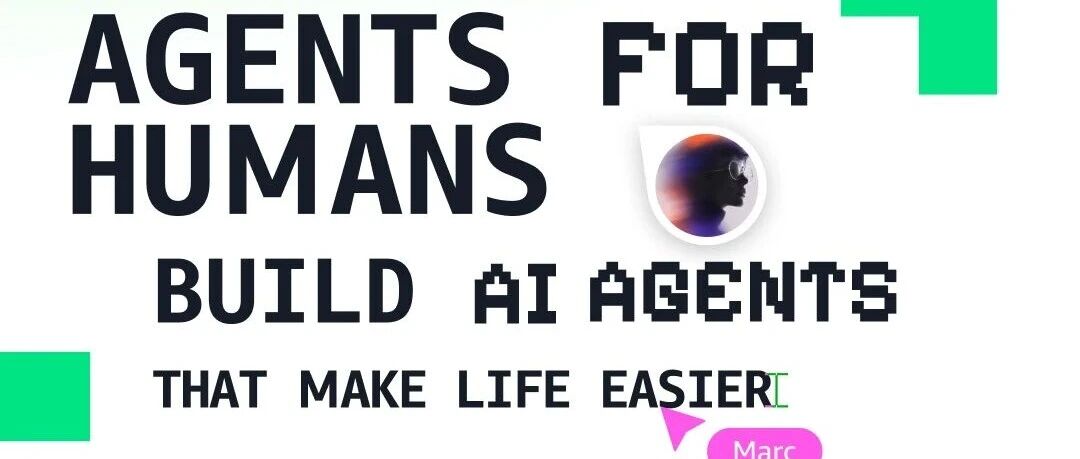
Image source: the official event page.
The question worth considering is whether you can find a real user and remove a stretch of repetitive work from their day.
Which small tasks make good projects?
The competition has three tracks: everyday life, professional work and Good Neighbor, which focuses on communities and nonprofit organizations. The organizers want agents that complete practical tasks, such as reducing repetitive work for individuals, work teams or community organizations. AWS's introduction to the three tracks[2]
You can start with someone whose work you already know. Consider a volunteer who organizes event registrations every week: where does the information come from, which fields are frequently missing and who receives the finished list? These questions are easier to answer than the broad ambition of building a community super-assistant.
This is an example of a possible project, not an official winning entry. Its advantage is that you can identify a clear beginning and end to the task, and ask a real user to point out unacceptable results.
With limited development time, completing one whole workflow is more convincing than demonstrating ten features that each get only halfway. In particular, think through what happens when information is missing, an exception occurs or a person needs to confirm something. The product should be able to continue appropriately, rather than relying on a recording of its single smoothest run.
Check these two conditions before committing your time
The first is eligibility. The competition accepts individuals who meet the age of majority in their place of residence, as well as teams and organizations, but it has geographic and affiliation restrictions. Quebec, Hong Kong, Singapore and Australia are among the excluded locations. This is not a complete list. Check the official rules item by item before entering; an online competition is not necessarily open to every region. Official eligibility rules[3]
The second is public code. Projects must be newly created within the competition's specified development period, submitted with a public code repository and licensed under MIT or Apache. Projects that require closed commercial code or cannot disclose their key implementation are not suitable for direct submission. Project rules[3]
The rules do not prohibit existing building blocks, but entrants need to disclose honestly which prior work they use. Giving an old product a new competition name is different from creating a new project during the development period.
There is more than one deadline
Project submissions close at 5:00 p.m. Pacific Daylight Time on September 14, which corresponds to:
Toronto: September 14 at 8:00 p.m.
Beijing: September 15 at 8:00 a.m.
Judging is scheduled for September 15 through October 8, with winners expected to be announced on October 14. Official dates page[4]
The submission requires a public repository with installation and running instructions, an architecture diagram, a demo video of no more than five minutes and an AWS Builder ID. The video should help judges understand the problem, who will use the project and how it completes the task. A live online demo can provide additional context, but is not mandatory. Judges will assess technical implementation, design, potential impact, creativity and presentation quality. Official submission and judging requirements[1]
The Strands Agents SDK is a technical requirement for this competition. Amazon Bedrock AgentCore is encouraged, but not mandatory. Do not expand a project you could otherwise finish into an infrastructure exercise just to include more technology names. Official FAQ[5]
$40,000 is the prize pool; $50 is the cloud credit
The amounts also need to be separated. The $40,000 is the competition's total cash prize pool, including a $10,000 grand prize. Each of the three tracks offers prizes of $5,000, $3,000 and $2,000. This is not funding that every entrant receives. Official prize details[1]
Registered participants can apply separately for $50 in AWS promotional credits. Applications close at noon Pacific Daylight Time on September 11, more than three days before the project deadline. Credits are limited in quantity and expire on October 31. Participants remain responsible for cloud service costs beyond the credit amount. Credit application FAQ[5], expiration and cost rules[3]
Free registration and running an entire project at no cost are two separate considerations.
Who should aim for this deadline?
If you already understand a small use case, are willing to publish the implementation and have time to prepare a complete demonstration, the competition gives you a clear delivery date.
If, instead, you still need to learn an unfamiliar industry, obtain data access or find users from scratch, the deadline could mean spending most of your time on preliminary work. In that case, build a solid project first; you do not necessarily have to enter this round.
The most valuable outcome can be a project that someone has used, that runs and that you can explain clearly. Even without a prize, it should leave you with something useful.
Registration and full rules: the official Agents for Humans Hackathon entry point[1]. Eligibility, times and amounts in this article were checked on September 6, 2026.