Perspectives
Starting at 64 GB of RAM, Microsoft wants to make a new developer PC less work to set up
Project Zenith brings development environments and local AI hardware together. Which parts require a new device, and which capabilities can you already use on your current PC?
Translated from 简体中文

For many developers, the real work has not started when a new computer first boots up.
Install an editor, a terminal and language runtimes. Make file extensions visible, then turn off the prompts you do not need. Only after these familiar little tasks does the machine gradually become your work computer.
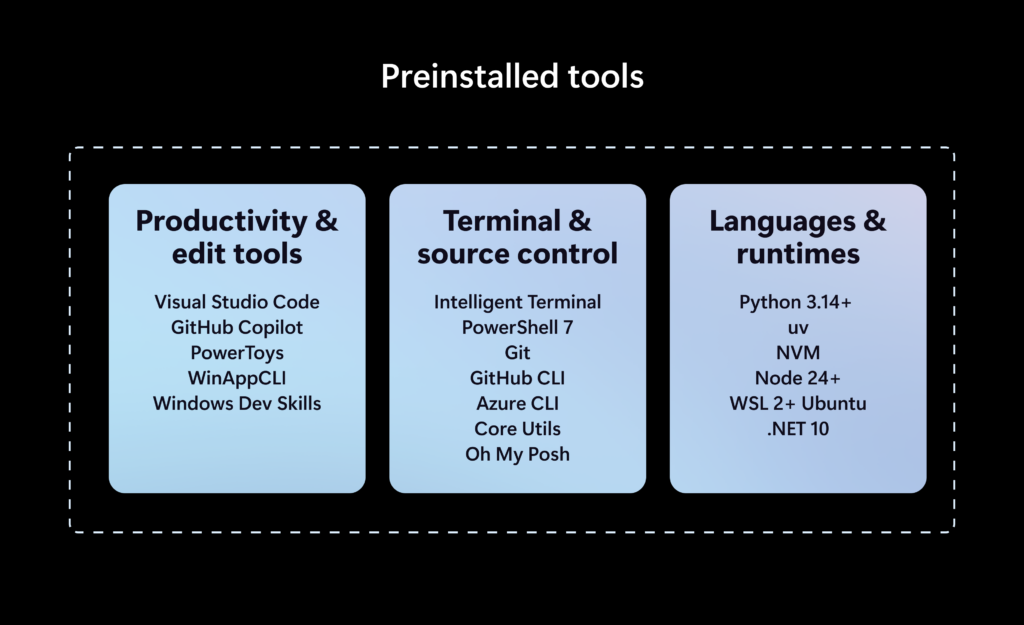
On September 4, Microsoft announced Project Zenith, an effort to move that initial setup work earlier in the process. Aimed at developer-class devices, it considers the development environment, default system settings and hardware needed for local AI together. Microsoft announcement[1]
The most striking figures in the plan are at least 64 GB of unified memory and at least 250 GB/s of memory bandwidth. That makes an early distinction important: Microsoft has announced an experience for specific devices, not a system upgrade that every Windows user will receive immediately.
Why start with memory?
Microsoft lists running models with 30 billion parameters or more locally as a target capability for these devices. It says the rollout will begin with AMD Ryzen AI Halo, with other devices and chip partners following over the coming months. Project Zenith device details[1]
The appeal here is more hardware headroom for local AI development. When models can run on their own machines, developers can repeatedly experiment with models, tools and workflows without sending every experiment to a remote service.
Still, there is a gap between fitting a model into memory and having that model do your work quickly and well enough. Parameter count alone does not describe the experience; the particular model, how it runs and the length of the task all affect the outcome.